
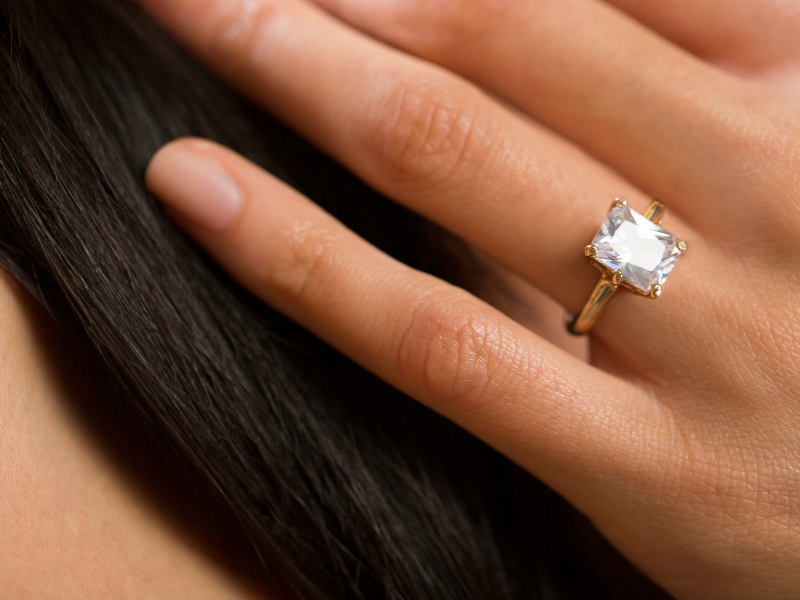
In recent years, lab grown diamonds have transformed how we think of jewellery. They offer affordability, ethical sourcing, and the same chemical and optical properties as mined diamonds. With so many benefits, it’s natural to look for a downside, and the one that we hear asked most often in the news is: Have lab grown diamonds lost their value?
In this post, we’ll dig into whether the value of lab grown diamonds has changed and what buyers should keep in mind when investing in one. At Hatton Garden Diamond, we want you to make informed choices, and that means being honest about both the benefits and limitations of lab grown diamonds.
The Evolution Of Lab Grown Diamond Prices
When lab grown diamonds first entered the jewellery market, they were actually priced a lot higher than visually comparable synthetic stones (Cubic Zirconia for example). However, as production technologies improved and supply increased, their price point began to shift.
Today, there are reports which indicate that the wholesale and retail values of lab grown diamonds have declined. In some cases this might be true, but a recent survey reported that lab grown diamonds are still a highly popular choice for the next generation, as people look for more ethically-sound options. In fact, 49% of adults aged 18-24 would choose a lab grown diamond over a mined option, meaning that any depreciation is likely to be temporary.
A decline is also partly due to the fact that lab grown diamonds are easier to produce than mined ones. As more manufacturers enter the market, and as production becomes more efficient, the relative scarcity lessens for lab grown stones. However, not all diamonds are created equally, and there is still a scale for lab grown diamonds based on the 4Cs: cut, colour, clarity and carat; which won’t be the same grade in every stone.
Why Lab Grown Diamonds Can Depreciate
Several factors contribute to lab grown diamonds losing value more rapidly than their mined counterparts:
Limited Secondary Market
Mined diamonds have had decades (even centuries) to build a resale network: auction houses, specialist dealers, luxury retailers for example. Lab grown diamonds are newer to that ecosystem, and fewer buyers are active in the secondary market, which constrains how much someone might pay when reselling. Looking at the popularity within the younger generation though, this is likely to change.
Perceptions & Rarity
Part of what underpins the value of natural diamonds is their geological rarity and desirability. Lab grown diamonds lack that ‘origin story,’ which can limit how much premium (if any) a buyer is willing to pay later. Again though, this is a view which is often held by the older generation, and something which is becoming less important to young people.
Rapid Price Correction
In many markets, prices for lab grown diamonds have already adjusted downward from earlier peaks. This correction means that what you might pay today could be lower than what earlier buyers paid. On the upside, this also means that you will have a stone that is identical to a mined option, at a fraction of the cost; and unless you’re purchasing a diamond as a present for a jeweller, it’s unlikely that anyone will ever know the difference!
Not Always Black And White
Whilst lab grown diamonds as a category can lose value, there are still nuances worth considering:
- Premium Cuts/Grades: The very best specimens, with excellent cut, top colour and clarity grades, are much more likely to hold value better than more common stones.
- Unique or Large Stones: Rare shapes, large carats, or exceptionally high-grade diamonds could still command stronger resale offers.
- Demand Fluctuations: If consumer interest in ethical diamonds continues to rise, as the reports are showing, then demand for lab grown stones will strengthen and improve their resale value.
What Buyers Should Keep In Mind
Here are some key takeaways to guide your purchasing decisions:
Buy for Emotion, Not Investment
Lab grown diamonds are to be viewed as beautiful pieces of jewellery; to be passed down for generations as symbols of love and tradition. Even if you purchased a mined diamond, there’s no guarantee that it will stand the test of time. Diamonds are tough stones, but not unbreakable.
As one jeweller summarised in a forum:
“Don’t buy any diamond with the thought of making money.”
Choose Quality Over Size
A smaller lab grown diamond of superb cut, colour, and clarity will likely look far better and retain more relative value than a larger stone with mediocre proportions. At Hatton Garden Diamond, we encourage customers to prioritise brilliance.
Certify and Document Everything
Always purchase a lab grown diamond with a respected certificate (at Hatton Garden we only stock GIA-certified). Keep purchase documents and appraisals; these improve buyer confidence later if you ever consider resale.
Enjoy It
The most practical approach with any item of jewellery is to focus on the joy and use of the piece now. Wear it, celebrate it, and appreciate its design and symbolism, rather than banking on future gains.
How Hatton Garden Diamond Advises Clients
At Hatton Garden Diamond, we only supply the very finest lab gown and mined diamonds. Our team will advise on cut, proportion, and clarity; ensuring that your diamond is the brightest and best for your budget.
Future Trends
Lab grown diamonds might not hold the same value with older generations as they do with newer ones, but the market is slowly shifting. In fact, now might be the best time to buy a lab grown stone, before they see a popularity surge.
At Hatton Garden Diamond, we’ll help you to understand both the strengths and limitations of lab grown diamonds. You’ll leave with a ring that looks spectacular, along a certification of its authenticity. If you’d like to explore our collections or compare stones in person, we’d be delighted to assist you.